
About FSHD
What is FSHD?
Facioscapulohumeral muscular dystrophy (FSHD) is a disorder characterized by muscle weakness and wasting (atrophy). The condition gets its name from the muscles most commonly affected:
- face (facio)
- around the shoulder blades (scapulo)
- and in the upper arms (humeral)
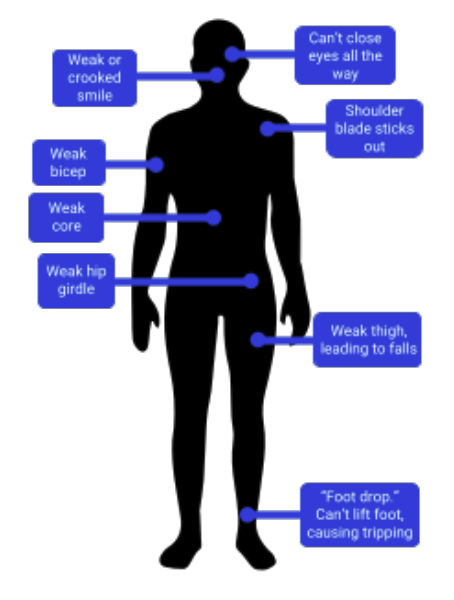
Hamstring and trunk muscles are affected early on but are less well recognized. Other arm and leg muscles are frequently eventually affected in the course of the disease. Some of the symptoms are shown in the diagram provided. For a fuller understanding, please refer to the FSHD Society link below.
Symptoms usually appear before age 20, but can begin in infancy or later in adulthood. Severity of the condition varies widely and some people with the disease allele remain asymptomatic.
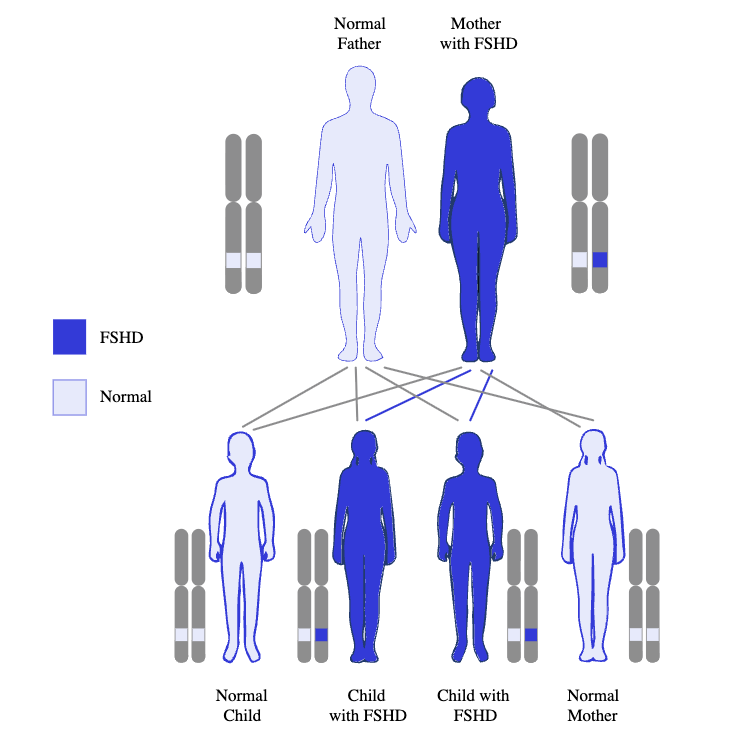
FSHD is most typically characterized by relatively slow disease progression. Specific symptoms and findings may also vary in range and severity, including among affected members of the same family. Life expectancy is not shortened. FSHD is usually inherited as an autosomal dominant genetic condition’ – NORD National Organisation for Rare Disorders
It was estimated by a European study in 2013 (taking a prevalence rate of 12/100,000 people with FSHD and the population at that time of c. 67.33 million in the UK) that there could be c.8000 FSHD patients in the UK.
What Causes FSHD?
That being said, an estimated one-third of people with FSHD did NOT get FSHD from a parent. The DNA abnormality occurred in them for the first time. No one knows why. The only way to know for sure if you or any family members have FSHD is with a genetic test.
Receiving a Diagnosis
Getting genetic confirmation is very important, as it helps us better understand your condition.
If the diagnosis is positive, we strongly recommend registering with the UK FSHD Registry. You do not need a formal diagnosis to register—if FSHD runs in your family and you think you may have it, you can still sign up. An adult can register on behalf of anyone under 16.
FSHD is formally diagnosed through a blood test. Most clinical trials will request this as a formal confirmation of the condition. There are saliva tests available via a research study run by the Peter Jones and Takako Jones lab. Note: these are not currently formally recognised.
What Can Be Done?

You can’t prevent FSHD, but there are many things you can do for your health. There are medical professionals to guide you, but many do not know about FSHD, so you will have to find professionals who are willing to help.
- A neurologist diagnoses your condition and checks on the progression of symptoms.
- A genetic counselor advises about genetic testing.
- A physical therapist develops exercises to help with muscle function and pain.
- An occupational therapist finds ways to make it easier for you to get around your home, do daily activities and work.
- A dietician advises you about eating healthy foods.
- An orthotist can fit you with a brace to reduce trips and falls.
- A pulmonologist checks your breathing.
- A mental health counselor helps you cope with stress, depression, and anxiety, and achieve well-being.
- 70-80% of people with FSHD report pain; exercise massage, acupuncture, mindfulness training, and pain medication can help.

FSHD Day
FSHD Day is a day when patients, carers and the community can bring awareness to the wider public about FSHD related information. It is a time for everyone to celebrate and bring awareness to the masses.
Join us on World FSHD Day each June 20th. We look forward to celebrating this with you.